
Play Tower Rush Now!
Home → Games
Casino games at Tower Rush Slot | Demo &
What Doesn't Count Towards Bonus Wagering on Table Games?
Table games contribute only 10% to the bonus turnover requirement, while slots count for 100%. This means that a €10 wager on a table game generates just €1 of progress toward the 300% welcome bonus up to €2,000. Players must wager €100 on table games to achieve the same bonus clearance as a single €10 spin on a slot.
The house edge significantly impacts this low contribution rate because it accelerates the depletion of the bonus balance. For instance, French Roulette with La Partage offers a house edge of 1.35%, which is relatively favorable but still costly over high volumes. The mathematical expectation ensures that the casino retains a portion of every bet before the 10% credit applies.
Side bets are excluded from this calculation entirely because they carry a much higher house edge than the main game. Baccarat Tie bets have a house edge of 14.36%, resulting in an RTP of only 85.64%. These high-risk wagers are disqualified to protect the bonus structure from rapid erosion by unfavorable odds.
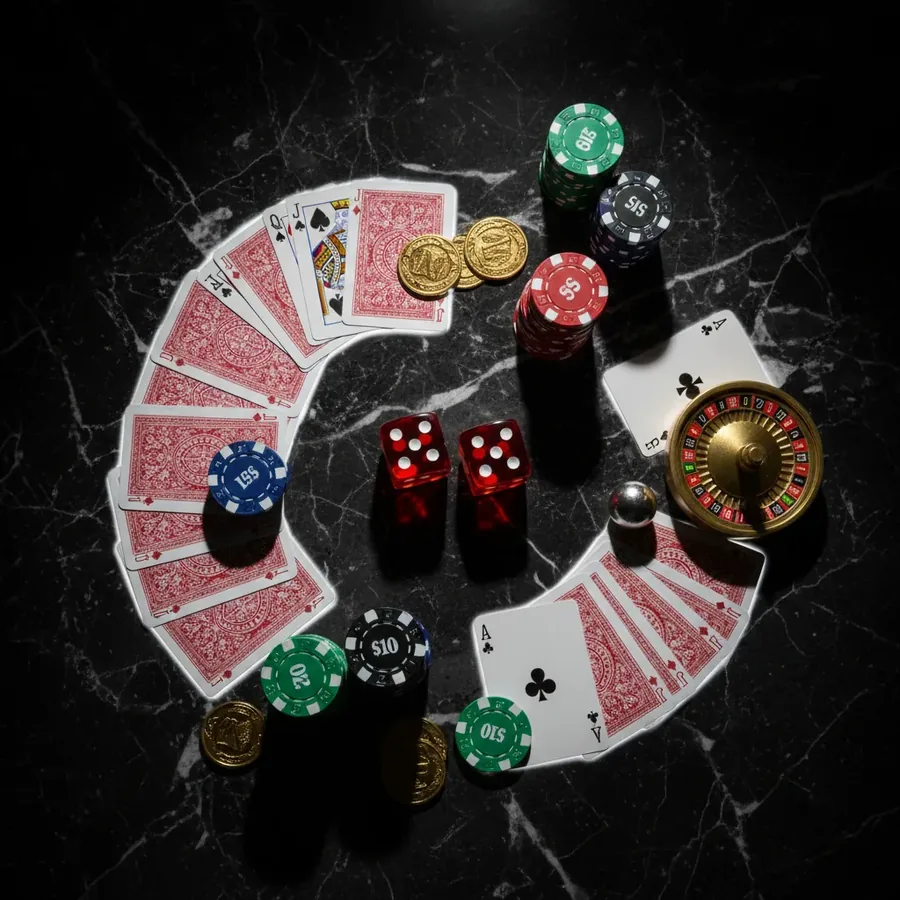
Hold or discard five cards: the decision
Jacks or Better with classic rules and a 3:2 payout yields an RTP of 99.85% and a house edge of 0.15%. This figure represents the theoretical return over hundreds of thousands of hands when players follow optimal strategy. Deviating from the correct hold or discard decision immediately increases the house advantage.
Using six decks instead of one typically reduces the RTP due to fewer opportunities for rare combinations. However, the specific rule set here allows for resplitting aces, which improves the RTP by approximately 0.08 percentage points. This mathematical adjustment partially offsets the disadvantage of using multiple decks.
Insurance is a side bet available when the dealer shows an ace, paying 2:1 if the dealer has blackjack. It carries a house edge of 7.47% and should always be rejected by basic strategy players. Accepting insurance reduces the overall expected return and violates the conditions for maintaining the lowest possible house edge.
Soft 17 rules affect the dealer's behavior and thus the player's long-term profitability. If the dealer hits on soft 17, the house edge increases by 0.22 percentage points compared to standing rules. This small change requires strict adherence to the adjusted strategy chart to preserve the 99.85% RTP target.
How Long Does a Roulette Round Take on Average?
French Roulette features a wheel with 37 sectors, including a single zero, which determines the base house edge. Even money bets like Red/Black pay 1:1, but the presence of zero creates the 1.35% house edge when La Partage applies. La Partage refunds half the stake on even-money bets if the ball lands on zero.
American Roulette contains 38 sectors, adding a double zero (00) to the wheel layout. This additional sector doubles the house edge to 5.26% for all standard bets, including Straight at 35:1. The probability of winning any single number bet drops to 1 in 38, fundamentally altering the risk profile.
The average duration of a round includes spinning the wheel, waiting for the ball to settle, and placing new bets. While not explicitly timed in the data, the higher house edge in American Roulette means faster bankroll depletion per hour of play. Players betting €10 per spin on American Roulette lose €0.525 on average per spin compared to €0.135 on French Roulette.
Inside bets in French Roulette do not benefit from La Partage, retaining the standard 2.70% house edge. A Corner bet pays 8:1, but the probability remains tied to the 37-sector wheel. Players seeking lower volatility should stick to outside bets where the reduced edge applies.
Jacks or Better: Check Payout Table Before Betting
Casino Hold'em uses an Ante plus Call structure with a house edge of 2.16% on the Ante bet. The actual risk element is 0.82% because the Call bet is twice the Ante, averaging 2.64 times the initial wager. Players must decide whether to fold or call after seeing the flop.
Sic Bo Small and Big bets offer the best value in the dice game with a house edge of 2.78%. These bets win on sums of 4–10 (Small) or 11–17 (Big), excluding triples which cause a loss. The payout is 1:1, making them statistically superior to any Triple or Double wagers.
Specific Triple bets in Sic Bo pay 180:1 but carry a house edge of 16.20%, far worse than the main bets. Any Triple pays 30:1 with a 13.89% house edge, still significantly higher than the 2.78% edge on Small/Big. Side bets in Sic Bo generally erode bankrolls much faster than the primary wagers.
Baccarat Banker bets with an 8-deck shoe and 5% commission have a house edge of 1.06%. The commission reduces the effective payout to 0.95:1, compensating for the banker's statistical advantage. This makes it the best bet in baccarat, outperforming Player bets and all side bets like Pair at 10.36% edge.
37 vs. 38 Sectors: One Zero Difference
Liberal Vegas Strip Blackjack offers an RTP of 99.72% with a house edge of 0.28% under ideal conditions. Rules such as S17, DAS, Resplit, and Late Surrender minimize the casino's advantage. This combination is among the most favorable for players in terms of long-term retention.
Craps Free Odds bets provide a unique 100% RTP with a zero house edge when taken behind Pass Line wagers. Combined with 3-4-5x odds, the total house edge drops to 0.37% for the entire round. This is the only casino bet where the payout matches the true odds exactly.
Insurance in Blackjack is a side bet that pays 2:1 if the dealer has a ten-value card. It has a house edge of 7.47% and should never be taken unless counting cards with a true count of +3 or higher. Taking insurance on a natural blackjack does not improve the outcome.
Baccarat Player Pair bets pay 11:1 but carry a house edge of 10.36% with an RTP of 89.64%. This side bet relies on the first two cards forming a pair, a low-probability event. The high edge makes it mathematically inferior to the main Banker or Player wagers.
Game categories at a glance
| Category | Examples | Stakes From | Highlight |
|---|---|---|---|
| Slots | Thunderstruck II, Extra Chilli Megaways, Chaos Crew | 0,10 EUR | thousands of titles |
| Table games | Roulette, Blackjack, Baccarat | 0,50 EUR | classic rules |
| Live casino | Quantum Roulette, Mega Fire Blaze Roulette Live | 0,20 EUR | real dealers |
| Jackpot games | Mega Moolah, Divine Fortune, Age of the Gods | 0,20 EUR | progressive pools |
| Instant games | Aviator, Plinko, Mines | 0,10 EUR | fast rounds |
| Video poker | Jacks or Better, Deuces Wild | 0,25 EUR | strategy based |
Columns and Dozens Pay 2:1 in Roulette
The French Roulette game features standard payout ratios for outside bets, where Columns and Dozens both return 2:1 on winning wagers. This ratio applies to all even-money outside bets including Red/Black, Odd/Even, and Low/High, which also pay 1:1. The house edge for these specific bets is significantly lower than inside bets due to the La Partage rule reducing the effective disadvantage.
Inside bets like Straight, Split, Street, and Corner offer higher payouts of 35:1, 17:1, 11:1, and 8:1 respectively, but carry a much steeper house edge of 2.70 percent. The La Partage rule does not apply to these internal wagers, meaning players lose the full amount upon hitting the zero sector. This distinction highlights the strategic difference between safer outside bets and riskier internal selections.
The American Roulette variant doubles the house edge to 5.26 percent because it includes an additional double zero sector alongside the single zero. Despite this increased disadvantage, the payout structure remains identical to the European wheel with Straight at 35:1 and Dozens at 2:1. Players seeking better odds should avoid the American version and stick to the French layout with its superior 1.35 percent edge on even-money bets.
French Roulette: La Partage Lowers to 1.35 Percent
The La Partage rule reduces the house edge on even-money bets in French Roulette from the standard 2.70 percent down to exactly 1.35 percent. When the ball lands on zero, players retain half of their wager on Red/Black, Odd/Even, or Low/High markets instead of losing the entire stake. This mechanism effectively halves the casino's advantage on these specific high-probability outcomes.
The En Prison rule offers an alternative mechanic that results in the same 1.35 percent house edge by allowing the bet to remain for another spin. Both rules apply exclusively to even-money bets and do not extend to any other betting categories on the table. Players must ensure they place their chips correctly to qualify for these protective measures against the house zero.
Inside bets such as Streets, Corners, and Six Lines do not benefit from La Partage and maintain the full 2.70 percent house edge typical of European wheels. A Straight bet pays 35:1 while a Split pays 17:1, but the risk of total loss on zero remains unchanged compared to non-La Partage variants. Understanding these distinctions is crucial for managing bankroll expectations across different betting zones.
Player pays 1:1 without any commission
In Baccarat, the Player hand wins at even money, paying 1:1 without any commission deduction from the winnings. This stands in contrast to the Banker bet, which carries a 5 percent commission on wins, resulting in an effective payout of 0.95:1. The absence of fees makes the Player bet slightly less expensive than the Banker option despite having a higher house edge.
The house edge for the Player bet is 1.24 percent, which is higher than the Banker bet's 1.06 percent advantage for the casino. The Banker hand benefits from drawing rules that give it a statistical slight edge over the Player hand in most scenarios. Consequently, the commission ensures the casino maintains its margin on the more frequently winning Banker outcome.
Baccarat Tie bets offer a tempting 8:1 payout but come with a devastating house edge of 14.36 percent, making them the worst value in the game. Side bets like Player Pair or Banker Pair also carry high edges around 10.36 percent despite paying 11:1 for successful predictions. Savvy players avoid these side propositions and focus on the main hands to minimize long-term losses.
How Much Does One Mistake Cost in 100 Hands?
Choosing a Blackjack table with 6:5 payouts instead of the standard 3:2 increases the house edge by exactly 1.39 percentage points to 1.85 percent. On a ten euro bet, a natural blackjack pays twelve euros under the 6:5 rule rather than fifteen euros under the traditional 3:2 structure. This difference represents a significant erosion of player value over time.
Over one hundred hands, assuming an average bet size and standard frequency of blackjacks, the extra cost accumulates substantially compared to optimal tables. Liberal Vegas Strip rules with S17, DAS, Resplit, and Late Surrender reduce the house edge to just 0.28 percent for skilled players. Deviating from basic strategy further inflates this edge, compounding the financial impact of suboptimal play.
Single deck games with classic rules and 3:2 payouts offer the best theoretical return at 99.85 percent RTP, boasting a mere 0.15 percent house edge. However, many modern venues compensate for single-deck advantages by implementing unfavorable rules like the aforementioned 6:5 payout structure. Players must scrutinize the specific rule set before sitting down to ensure they are playing on favorable terms.
Insurance bets represent a separate negative expectation wager with a house edge of 7.47 percent when six to eight decks are used. Taking insurance when the dealer shows an ace is statistically unprofitable unless the player is counting cards and holds a true count of three or higher. Avoiding this side bet is essential for maintaining the lowest possible house edge during gameplay.
Soft 17: the Ace counts 11 or 1
When the dealer hits on soft seventeen, defined as a hand containing an Ace valued at eleven plus other cards totaling six, the house edge increases by 0.22 percentage points. This rule forces the dealer to take an additional card, potentially busting but also improving weak hands that would otherwise stand. It is a common variation found in many online casino environments.
Conversely, allowing the dealer to stand on soft seventeen provides a slight advantage to the player, reducing the overall house edge compared to the hit variant. Other rule modifiers like Resplitting Aces can improve player odds by 0.08 percentage points, while Doubling After Split adds another 0.14 percentage points of value. These nuances collectively determine the final RTP of the blackjack game.
Liberal Vegas Strip rules combine multiple player-friendly conditions including S17, Double After Split, Resplitting, and Late Surrender to achieve a low 0.28 percent house edge. This configuration allows players to maximize their theoretical return on investment when employing perfect basic strategy. Tables lacking these liberal features will inevitably result in higher long-term costs for the gambler.
37 vs. 38 Sectors: What the Double Zero Costs
European Roulette features a wheel with 37 sectors, establishing a base house edge of 2.70% for inside bets. American Roulette adds a double zero sector to create 38 total slots, which mathematically doubles the casino advantage on standard wagers. This structural difference pushes the house edge up to 5.26% on identical bet types like straight or split bets. The additional green pocket directly reduces the probability of winning without altering the payout ratios.
The presence of the extra zero in American Roulette increases the house edge from 2.70% to 5.26% on even-money bets. French Roulette mitigates this by applying La Partage, which refunds half the stake on red-black losses when zero appears. This rule lowers the effective house edge to just 1.35% for those specific outside bets. Without La Partage, the French wheel retains the standard 2.70% edge for all other wagering options.
Players choosing American Roulette face a significantly higher cost per spin due to the 5.26% house edge. A $10 bet on red loses an average of $0.53 compared to $0.27 on a European wheel. This disparity accumulates rapidly over hundreds of spins, eroding the bankroll faster. The 38-sector design offers no compensatory increase in payout multipliers for the added risk.
Corner Pays 8:1, Dozen Only 2:1
A corner bet covers four adjacent numbers and pays out at odds of 8:1 in both European and American variants. This payout remains constant regardless of whether the wheel has 37 or 38 sectors. The fixed ratio does not adjust for the increased probability of the ball landing on any specific number. Players receive eight units for every one unit wagered upon a successful hit.
Dozen bets cover twelve numbers each and offer a lower return of 2:1 on winning outcomes. This payout is identical across all roulette variations, including French, European, and American wheels. The house edge varies based on the wheel type, but the multiplier for dozen wins stays unchanged. A winning dozen bet yields two units profit plus the original stake back.
Comparing these payouts reveals that corner bets offer nearly four times the return of dozen bets. However, the probability of hitting a corner is only one-third that of hitting a dozen. The risk-reward profile differs significantly despite both being standard table wagers. Players must weigh the higher frequency of dozen wins against the larger potential gain from corners.
House Edge and RTP: Two Names for the Same Number
Return to Player (RTP) represents the theoretical percentage of wagered money paid back to players over time. Sic Bo special bets show an RTP range from 81.48% to 92.13% depending on the specific wager type. This wide variance indicates significant differences in value between single number and triple bets. Lower RTP figures correspond to higher costs for the player over extended sessions.
House edge is the mathematical complement of RTP, representing the casino's retained percentage of total bets. For example, a 92.13% RTP translates to a 7.87% house edge on single number bets. Conversely, an 81.48% RTP results in a steep 18.52% edge on specific double bets. These metrics are inversely related, summing exactly to 100% in standard game mathematics.
Blackjack demonstrates how rules drastically alter these percentages, with RTPs ranging from 98.15% to 99.85%. A 6-deck game paying 6:5 for blackjack holds a 1.85% house edge, reducing RTP significantly. Single-deck games with favorable rules can achieve a 99.85% RTP, leaving only a 0.15% edge. Understanding this relationship helps players identify the most mathematically sound tables available.
Submit documents no older than three months
Identity verification requires recent documentation to ensure the security and integrity of the account holder. Financial regulations mandate that proof of address be submitted within the last ninety days. This timeframe prevents the use of outdated information that may no longer reflect the player's current residence. Stale documents are automatically rejected during the initial review process.
Accepted forms of identification typically include government-issued photo IDs and official utility bills or bank statements. The date printed on the document must clearly fall within the three-month window preceding submission. Scanned copies or high-quality photographs are generally required to verify legibility and authenticity. Blurry images or expired passports will delay the approval timeline significantly.
Failure to provide valid, recent documents can result in restricted account functionality or withdrawal holds. Players should regularly update their profile information to maintain compliance with anti-money laundering policies. Keeping digital copies of current documents ready ensures faster processing during future verification requests. The system prioritizes accounts with complete and up-to-date KYC records.
Before Double Down: read the open dealer card
Double down allows a player to double their initial bet in exchange for receiving exactly one more card. This move is strategically optimal when the dealer shows a weak upcard, such as a six or lower. The probability of the dealer busting increases significantly with these low-value openings. Exploiting this statistical weakness maximizes the expected value of the doubling action.
Basic strategy charts dictate specific scenarios where doubling is mandatory or highly recommended based on the dealer's visible card. If the dealer shows a seven or higher, the risk of them making a strong hand outweighs the benefit of doubling. Players should refrain from doubling when the dealer is likely to reach nineteen or twenty. Adhering to these rules minimizes long-term losses in blackjack sessions.
The payout for a doubled hand remains standard, typically 1:1 for a winning blackjack or regular hand. However, the increased exposure means losses are also doubled if the final hand loses. Splitting aces often restricts doubling options, limiting further strategic flexibility after the split. Careful assessment of the dealer's upcard is crucial before committing additional funds to the pot.
Tower Rush 2026